
AI Glossary
Voice Bot – Short Explanation
A voice bot is a conversational AI system that uses speech recognition, natural language understanding (NLU), and machine learning to understand spoken language and respond naturally to users.
Voice bots are commonly used in customer service IVRs, virtual assistants, smart-home devices, vehicles, and enterprise support systems. Popular examples include Amazon Alexa, Apple Siri, and newer AI-powered voice assistants developed by companies such as OpenAI and Google.
Building an effective voice bot requires high-quality training data, including speech recognition datasets, multilingual audio samples, and real conversational interactions collected from the environments where the bot will be used.
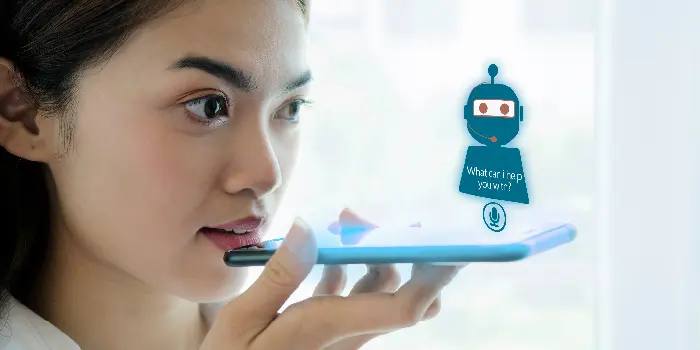
Difference Between Voice Bots and Chat Bots
Voice bots and chatbots are both types of conversational AI systems designed to interact with users naturally. The main difference is the mode of communication.
Chatbots primarily use text-based interactions through websites, apps, or messaging platforms. Voice bots use speech recognition and voice responses to communicate with users through phone systems, smart devices, vehicles, or voice-enabled applications.
Both voice bots and chatbots use technologies such as natural language processing (NLP), machine learning, and conversational AI to understand user intent and generate responses.
Voice bots are commonly used in customer service IVRs, smart-home devices, and hands-free environments where speaking is faster or more convenient than typing. Chatbots are more commonly used for web support, messaging apps, and digital customer service workflows.
Modern AI systems increasingly combine both text and voice capabilities to create more seamless conversational experiences.
Tip:
Creating high-performing voice bots requires diverse, multilingual voice data captured in real-world conditions.
LXT provides voice data collection services tailored to your industry and use case – ensuring your bot is trained to understand users accurately across accents, dialects, and contexts.
What are the use cases for voice bots?
Voice bots are widely used across customer service, enterprise operations, and consumer applications. They help automate conversations, answer questions, and complete routine tasks through spoken interactions.
One of the most common use cases for voice bots is customer support. Businesses use AI-powered voice assistants in IVR systems and contact centers to handle tasks such as answering customer queries, routing calls, checking account information, and tracking orders.
Voice bots are also used across industries such as banking, healthcare, retail, travel, and insurance for tasks including:
- Booking appointments
- Processing payments
- Providing account or order updates
- Scheduling reminders
- Handling basic technical support
- Managing reservations
- Collecting customer feedback
In consumer technology, voice bots power smart speakers, mobile assistants, vehicles, and smart-home devices. They can help users set reminders, control connected devices, search for information, play media, or access services hands-free.
Modern voice bots are also being integrated into enterprise workflows to automate repetitive tasks, improve response times, and provide 24/7 support.
Benefits and Business Use Cases of Voice Bots
Voice bots are widely used across customer service, banking, healthcare, retail, and enterprise operations to automate conversations and handle routine tasks. Businesses use them to reduce wait times, improve response speed, and provide support outside regular working hours.
In customer service, voice bots can answer common questions, route calls, schedule appointments, track orders, process payments, and provide account updates. Many companies also use voice bots in IVR systems and contact centers to handle large volumes of customer interactions more efficiently.
Voice bots are also used to support sales and customer engagement. They can guide customers through products or services, provide recommendations, send reminders, and assist with purchases or bookings.
In sectors such as BFSI, voice bots help customers check balances, receive transaction updates, manage support requests, and access banking services through voice interactions.
Businesses also use voice bots internally to automate repetitive tasks such as scheduling meetings, sending reminders, updating records, and handling basic employee requests.
Some of the main benefits of voice bots include:
- Faster customer support
- 24/7 service availability
- Reduced workload for support teams
- Consistent customer interactions
- Hands-free accessibility
- Multilingual support
- Improved operational efficiency
As conversational AI continues to improve, voice bots are becoming more useful for both customer-facing services and internal business operations.
How does a voice bot function?
A voice bot works by listening to spoken input, converting speech into text, understanding the user’s intent, and generating a relevant response. To do this, voice bots use technologies such as automatic speech recognition (ASR), natural language understanding (NLU), and conversational AI.
When a user speaks, the voice bot first uses speech recognition to convert the audio into text. Voice activity detection helps the system identify when a person starts and stops speaking. Once the speech is transcribed, the bot analyzes the request to understand the user’s intent and context.
After processing the request, the conversational engine generates a response and converts it back into speech using text-to-speech technology. More advanced voice bots can also manage multi-step conversations, remember context during interactions, and respond more naturally to follow-up questions.
Modern AI-powered voice bots use machine learning and large language models to improve accuracy, handle different accents and languages, and support more natural conversations across customer service, smart devices, and enterprise applications.
Types of Voice Bots
Voice bots can be categorized based on how they function and the type of interactions they are designed to handle.
AI-Powered and Rule-Based Voice Bots
Rule-based voice bots follow predefined scripts and commands. They work well for simple and repetitive tasks such as call routing, appointment booking, or answering common customer questions.
AI-powered voice bots use machine learning, natural language processing (NLP), and conversational AI to understand user intent and respond more naturally. These bots can handle more flexible conversations, understand context, and handle a wider range of requests.
Hybrid Voice and Text Bots
Some conversational systems support both voice and text interactions. Users can speak to the bot or interact through chat depending on the device or situation. These hybrid systems are commonly used in customer support platforms, virtual assistants, and mobile applications.
General-Purpose and Task-Specific Voice Bots
General-purpose voice bots are designed to handle a broad range of tasks and conversations. Virtual assistants such as Amazon Alexa or Apple Siri are examples of systems that support multiple types of requests.
Task-specific voice bots are built for a particular function or industry. For example, a banking voice bot may help customers check balances or report lost cards, while a healthcare voice bot may assist with appointment scheduling or patient support.
What are the challenges of using voice bots?
Voice bots can automate conversations and improve customer support, but they still face several challenges. Speech recognition systems may struggle with accents, background noise, unclear speech, or regional dialects. Voice bots can also have difficulty understanding slang, context, or complex multi-step requests.
Another challenge is maintaining natural conversations. Poorly designed voice bots can feel repetitive or frustrating if they fail to understand user intent or provide irrelevant responses.
Privacy and security are also important concerns, especially in industries such as banking and healthcare where voice data and personal information must be handled carefully.
To improve performance, voice bots require high-quality training data, continuous testing, and regular updates based on real user interactions.
Voice Bot History and Future
Voice bot technology became more widely used in the early 2000s as speech recognition and natural language processing improved. Consumer assistants such as Amazon Alexa and Apple Siri helped popularize voice-based interactions across smartphones, smart speakers, vehicles, and smart-home devices.
Today’s voice bots are powered by conversational AI, machine learning, and large language models that allow systems to respond more naturally and manage more complex interactions.
Modern voice AI is increasingly focused on:
- Real-time conversations
- Multilingual support
- More natural speech synthesis
- Personalized interactions
- AI agents that can complete tasks across applications and devices
Voice bots are also becoming more integrated into enterprise systems, customer service platforms, and smart devices across industries.
Best Practices for Voice Bots
Effective voice bots should be simple, clear, and easy to interact with. Conversations should feel natural and guide users without unnecessary complexity.
Some common best practices include:
- Using clear and natural language
- Keeping responses short and easy to follow
- Supporting different accents and speech patterns
- Providing fallback options when the bot cannot understand a request
- Maintaining a consistent conversational tone
- Regularly testing and improving the system based on user feedback
A well-designed voice bot should help users complete tasks quickly while keeping conversations smooth and intuitive.