

LXT finds and tests domain experts by turning required expertise into structured, testable criteria, screening candidates against these criteria and ramping up production via a controlled review process. A lead reviewer holds the quality bar as production scales.
AI initiatives increasingly rely on highly specialised domain expertise, whether in audio engineering, healthcare compliance, financial regulation or complex linguistic analysis. When that expertise isn’t carefully operationalised, quality can become inconsistent and downstream model performance can suffer in subtle but costly ways.
For organisations investing in AI systems, the challenge isn’t simply finding experts. It’s building a repeatable way to validate and scale that expertise without introducing risk.
Rather than relying on one-off hires, LXT applies a deliberate methodology to building expert-led data teams.
Need vetted domain experts for your AI data project?
LXT recruits, tests, and manages specialist annotators, from audio engineers to clinicians, with the review processes that keep their judgements consistent at scale.
Operationalise domain expertise
The process begins by clarifying and specifying the expertise required. Are particular qualifications required? Which skills or aptitudes are transferrable from other fields? This expertise is translated into structured, testable criteria, ensuring that expert selection is targeted and aligned with the task from the outset.
Candidates need to be evaluated not only on their subject-matter knowledge, but on their ability to apply that knowledge in a practical, task-specific context. Early in the process, we establish benchmark evaluations and structured screening mechanisms, allowing us to assess future contributors consistently and at scale.
In parallel, we develop clear, expert-informed guidelines that define expected outputs and decision boundaries. This creates a shared standard that supports both accuracy and consistency across the team.
From expertise to consistent outcomes
The hard work really starts in this early stage. A small group of qualified experts is onboarded first, allowing for a controlled ramp-up. Early production data is reviewed intensively to identify edge cases, refine guidelines, align decision-making and establish working communication channels. This reduces downstream rework and ensures quality standards are met before scaling. In practice, this approach reduces error rates and minimises costly rework during later stages of model development.
The selection of a lead reviewer is a critical part of delivering high-quality data. This individual ensures consistency in edge-case decisions. They are a good communicator and collaborator, and they play a central role in maintaining quality standards as production expands.
For projects with strict quality thresholds, our project managers and engineers can implement additional automated validation checks to complement expert review.
The team transitions to full production capacity once the feedback loops stabilise and quality metrics are consistently met.
Reliable accuracy leads to reliable models.
From expert recruitment to acoustic precision
An illustration of the kind of expertise that LXT can source is a project that required experts to classify fourteen distinct acoustic categories, including “rattle”, “buzz” and “hum”.
Although these sounds may appear similar to non-specialists, accurate identification requires domain expertise. For instance, a key difference between a “buzz” and a “hum” lies in their different frequency characteristics, visible on a spectrogram. A hum typically occurs around 50 to 60 Hz and appears as a relatively broad band on a spectrogram, reflecting electrical noise introduced through the signal chain. A buzz, by contrast, appears at higher frequencies as a thinner spectral line and is often caused by nearby sources such as fluorescent lighting, dimmer switches or on-camera microphones.
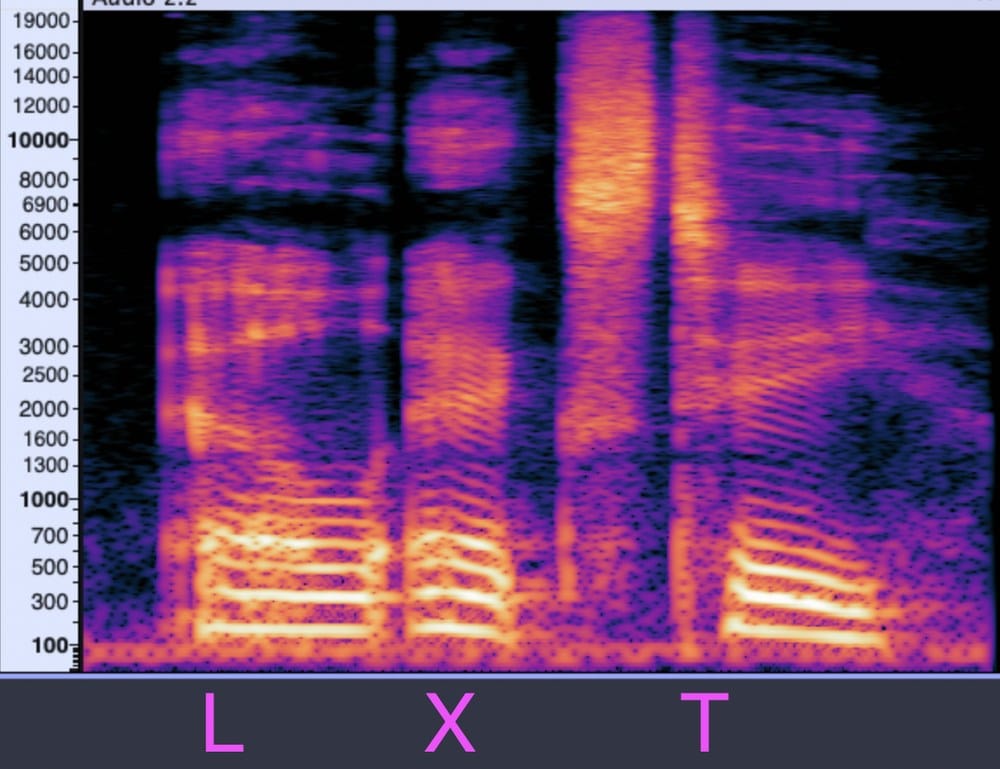
By working with trained audio engineers who understood both the acoustic theory and the practical causes of these artefacts, the project achieved consistent classification across categories that would be difficult for non-specialists to distinguish. Working closely with the experts, LXT established clear guidelines and review processes that enabled consistent decisions across the dataset while maintaining the required quality standards.
High-quality AI systems depend on more than scale
High-quality AI systems depend on accurately capturing specialised knowledge and applying it consistently. Identifying the right experts, installing a collaborative review system to enable consistent judgements, and building structured quality processes around the expert knowledge ensures that domain expertise translates into reliable training data.
By approaching expert recruitment and ramp-up as an operational discipline, LXT supports organisations with their complex AI projects with confidence, predictability and precision.