
AI Glossary
Voice Dataset – Short Explanation
Voice datasets are collections of recorded speech used to train, test, and improve artificial intelligence systems that understand human language. These speech or audio datasets typically contain recordings paired with transcripts, speaker information, accents, languages, or emotional labels.
Voice datasets are the foundation of technologies like voice assistants, speech-to-text software, call center automation, and voice-controlled devices. Without large amounts of speech data, AI systems would struggle to recognize words accurately or understand how people naturally speak.
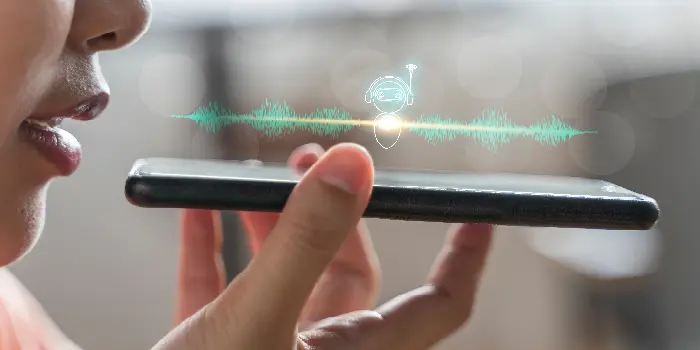
For example, when you ask Siri for directions or use voice search on your smartphone, the system relies on voice datasets that have been used to train speech recognition models.
Why Are Voice Datasets Important?
People do not all speak the same way. Differences in accents, dialects, pronunciation, speaking speed, word choice, and background noise can all influence how speech is understood.
A high-quality voice dataset exposes AI systems to these variations, helping them perform more accurately in real-world situations. A customer service bot may need to understand callers from different regions, a voice assistant should recognize commands spoken quickly or informally, and a transcription tool must accurately convert conversations into text even when multiple people are speaking.
The more diverse and representative the dataset, the better equipped the AI is to understand how people actually communicate.
Types of Voice Datasets
Different AI applications require different types of speech data. While some datasets are designed to help AI recognize words accurately, others focus on understanding speakers, emotions, languages, or conversational patterns.
Read Speech Datasets
Read speech datasets contain recordings of people reading predetermined text, phrases, or scripts. Because the spoken content is known in advance, these datasets are easier to transcribe and annotate accurately. They are widely used to train and evaluate automatic speech recognition (ASR) systems, helping models learn pronunciation patterns, vocabulary, and sentence structures.
These datasets are particularly useful during the early stages of model development, where clean and consistent speech data is needed. However, because people tend to speak more formally when reading, they may not fully reflect how language is used in everyday conversations.
Conversational Speech Datasets
Conversational speech datasets capture natural interactions between two or more people. Unlike scripted recordings, conversations often include interruptions, incomplete sentences, slang, filler words, and changes in speaking pace.
These datasets help AI systems learn how people communicate in real-world situations and are commonly used for virtual assistants, customer service bots, and call center automation. Since natural conversations are often less predictable than scripted speech, they provide valuable training data for systems that need to understand context and speaker intent.
For example, a dataset may contain customer support calls where users ask questions, explain problems, or change topics during the conversation.
Multilingual Voice Datasets
Multilingual voice datasets include recordings from speakers across multiple languages, dialects, and regions. They are essential for building AI systems that serve global audiences and need to understand users regardless of the language they speak.
These datasets help models learn language-specific pronunciation patterns while also improving their ability to switch between languages when necessary. They are particularly valuable for voice assistants, translation tools, and international customer support applications.
For example, a global voice assistant may be trained using recordings from English, Hindi, Spanish, German, and French speakers to provide a more consistent user experience across different markets.
Speaker Recognition Datasets
Speaker recognition datasets are designed to help AI systems identify or verify who is speaking rather than what is being said. They contain recordings from many individuals, often collected across different environments, devices, and speaking conditions.
These datasets are used to train voice biometrics systems that can distinguish one speaker from another. They help models learn unique vocal characteristics such as pitch, tone, speech patterns, and vocal tract features.
Common applications include voice-based authentication, fraud detection, and secure access systems where a person’s voice acts as an additional layer of identity verification.
Emotion Recognition Datasets
Emotion recognition datasets contain speech recordings labeled with emotional states such as happiness, frustration, anger, sadness, excitement, or neutrality. The focus is not only on the words being spoken but also on how they are spoken.
These datasets help AI systems analyze vocal cues such as tone, pitch, volume, and speaking speed to infer emotional intent. They are commonly used in customer experience monitoring, mental health research, and conversational AI applications that aim to respond more naturally to users.
For example, a contact center analytics platform may use emotion recognition models to identify signs of customer frustration during support calls.
Keyword Spotting Datasets
Keyword spotting datasets are used to train systems to detect specific words or phrases within a stream of audio. Rather than processing an entire conversation, these models focus on recognizing predefined commands or trigger phrases.
They are commonly used in smart speakers, mobile devices, wearables, and automotive voice control systems. Because these systems are always listening for a specific keyword, the datasets often include recordings from different environments, accents, and noise conditions to improve reliability.
Examples include wake words such as “Hey Siri,” “Alexa,” or “OK Google,” which activate a voice assistant and initiate further speech processing.
Tip: Custom Voice Datasets from LXT
Do you need a collection of voice recordings specifically created for training your application? Then ask LXT. LXT uses its international community of millions to create voice datasets tailored exactly to your needs. This is probably the most efficient way to get a custom voice dataset without relying on off-the-shelf solutions.
Voice Datasets in Real-World Applications
Voice datasets play a critical role in training AI systems to understand, process, and respond to spoken language. From virtual assistants to security systems, these datasets help models learn how people speak in different contexts and environments.
Automatic Speech Recognition (ASR)
Automatic Speech Recognition (ASR) systems convert spoken language into written text. Voice datasets provide the speech recordings and transcripts needed to teach models how words, phrases, and sentence structures sound when spoken by different people.
ASR technology is widely used in transcription services, captioning tools, and voice-controlled applications. The accuracy of these systems often depends on the diversity of the training data, including different accents, speaking styles, and background conditions. Many live meeting transcription software and dictation tools rely on ASR models trained on large speech datasets.
Voice Assistants
Voice assistants use speech data, natural language processing (NLP), and conversational AI to understand user commands and respond appropriately. Training datasets help these systems recognize variations in pronunciation, speaking speed, and natural language patterns.
A well-trained voice assistant can handle a wide range of requests, from setting reminders and answering questions to controlling smart home devices. Exposure to diverse speech data also helps improve performance across different regions and demographics.
Examples include Apple’s Siri, Amazon Alexa, and Google Assistant.
Customer Service Automation
Many organizations use conversational AI and voice bots to automate customer support interactions. Voice datasets help these systems understand common customer requests, identify intent, and respond accurately.
Training data often includes real or simulated customer conversations covering topics such as billing inquiries, appointment scheduling, account management, and technical support. Better datasets generally lead to more natural and efficient customer interactions.
Voice Search
Voice search systems allow users to perform searches by speaking rather than typing. To function effectively, these systems must understand natural language queries, conversational phrasing, and variations in pronunciation.
Voice datasets help train models to interpret spoken questions and connect them to relevant search results. This capability has become increasingly important as voice-enabled devices and mobile assistants continue to grow in popularity.
Speaker Verification
Speaker verification systems use voice datasets to learn the unique characteristics of individual voices. Rather than focusing on what is being said, these systems analyze vocal patterns to determine whether a speaker’s identity matches a known profile.
This technology is commonly used in banking, secure access systems, and fraud prevention solutions. High-quality datasets containing recordings from many speakers help improve accuracy and reduce the risk of false matches.
Emotion and Sentiment Analysis
Emotion and sentiment analysis systems use speech data to identify emotional signals within conversations. Factors such as tone, pitch, speaking pace, and vocal intensity can provide valuable context beyond the spoken words themselves.
Organizations use these systems to better understand customer experiences, monitor service quality, and gain insights from conversations. In some cases, emotion-aware AI can also adapt its responses based on a user’s emotional state, creating more natural and personalized interactions.
How Voice Datasets Are Created
Creating a voice dataset involves collecting speech recordings from a diverse group of speakers and pairing them with accurate transcriptions and metadata. Depending on the use case, metadata may include information such as language, accent, age group, recording environment, or speaker characteristics.
Once collected, the data is reviewed, cleaned, and validated before being divided into training, validation, and testing datasets. Throughout the process, data quality, speaker diversity, and realistic recording conditions are essential for building reliable speech recognition and conversational AI systems.
Common Challenges with Voice Datasets
Building and maintaining voice datasets is not always straightforward.
Accent Bias
Datasets that lack accent diversity may perform well for some speakers while producing lower accuracy for others. If a dataset is dominated by a particular accent or region, the resulting model may struggle to understand users from different linguistic backgrounds. Ensuring broad accent coverage is essential for building inclusive and reliable voice AI systems.
Limited Language Coverage
While large speech datasets exist for widely spoken languages such as English, many languages and regional dialects remain underrepresented. This lack of training data can make it difficult to develop accurate voice applications for global audiences. As a result, speech recognition performance often varies significantly between languages.
Annotation Errors
Voice datasets rely on accurate transcriptions and labels to train AI models effectively. Errors in transcription, speaker labeling, or metadata can introduce noise into the training process and reduce model accuracy. Even small inconsistencies can have a noticeable impact when working with large-scale datasets.
Background Noise Variability
Real-world audio is rarely recorded in perfect conditions. Conversations may include traffic noise, office chatter, poor microphone quality, echoes, or overlapping speech. While exposure to these conditions can improve model robustness, excessive noise can make recordings difficult to transcribe and label accurately.
Data Imbalance
Some speaker groups may be overrepresented in a dataset, while others have limited representation. For example, a dataset may contain significantly more recordings from younger speakers than older adults, or more male voices than female voices. Such imbalances can lead to uneven model performance across different user groups.
Privacy Concerns
Voice recordings may contain personal, sensitive, or identifiable information. Organizations collecting speech data must implement safeguards to protect participant privacy and comply with data protection regulations. Failure to handle voice data responsibly can create legal, ethical, and reputational risks.
Domain-Specific Limitations
A voice dataset that performs well in one industry may not be suitable for another. For example, a general-purpose speech dataset may not include specialized terminology used in healthcare, finance, or legal services. In these situations, additional domain-specific recordings are often needed to achieve reliable results.
Data Collection Costs
Collecting, transcribing, annotating, and validating speech recordings can be both time-consuming and expensive. Large-scale projects often require thousands of speakers across multiple languages, accents, and environments. Maintaining quality while scaling a dataset remains one of the biggest challenges in voice AI development.
Popular Voice Dataset Examples
Several publicly available datasets are widely used in speech AI research and development.
- Mozilla Common Voice, an open-source speech dataset collected from volunteers worldwide.
- LibriSpeech, a large dataset based on audiobook recordings.
- VoxCeleb, a dataset designed for speaker recognition and voice identification tasks.
- TED-LIUM, which contains recordings and transcripts from TED Talks.
These datasets help researchers and organizations develop more accurate speech technologies.
Ethical and Legal Considerations
Voice data is personal data. Organizations collecting speech recordings must follow strict privacy and security practices.
This typically includes:
- Obtaining informed consent from participants.
- Removing personally identifiable information when possible.
- Securing audio files and transcripts.
- Allowing users to request data deletion.
- Complying with regulations such as GDPR and other applicable privacy laws.
Responsible data collection helps ensure voice AI systems remain trustworthy and legally compliant.
Conclusion
Voice datasets are the foundation of modern speech AI, enabling systems to recognize speech, understand different speakers, and interact more naturally with users. Whether powering virtual assistants, transcription tools, customer service bots, or voice authentication systems, the quality of the underlying dataset plays a major role in overall performance.
As organizations continue to adopt voice-enabled technologies, the demand for diverse, accurately labeled, and ethically sourced voice datasets will only continue to grow.